
BLOGS

Do You Need a Real Estate License to Work in Alabama? Complete Requirements Guide
Real Estate Careers, Licensing in Alabama
Do I Need a Real Estate License to Work in Real Estate?
If you are considering a real estate career in Alabama, one of your first questions is likely whether you truly need a license to get started. The answer is both straightforward and nuanced: for most income‑producing activities that involve helping others buy, sell, lease, or manage property, you do need a real estate license Alabama recognizes as valid and active. However, there are also support roles that do not require licensing. Understanding the difference is essential before you invest time and money in education and exams.

When a Real Estate License Is Required in Alabama
The Alabama Real Estate Commission (AREC) regulates who must be licensed and what activities require that license. As a rule, if you are performing real estate services for another person and receiving compensation—whether that is a commission, salary, referral fee, or bonus—you will almost certainly need an Alabama real estate license. This includes common roles such as residential sales agent, buyer’s agent, listing specialist, and most property management positions that negotiate leases or collect rent on behalf of owners.
Activities that generally require a license include showing properties to prospective buyers or tenants, preparing and presenting offers, advising clients on pricing and marketing strategies, and negotiating purchase agreements or leases. Even if you consider yourself “just helping out” a friend or family member, if you are paid in any form for those services, the state will treat you as a real estate professional and expect you to be properly licensed under Alabama law.
Roles in Real Estate That Do Not Require a License
Not every job connected to real estate requires a license. If you are not yet ready to commit to the full licensing process, you can still gain valuable industry experience in certain unlicensed positions. Examples include administrative assistant in a brokerage, marketing coordinator, transaction coordinator handling paperwork under a broker’s supervision, or receptionist greeting clients and scheduling showings. These roles allow you to observe how business is conducted without directly engaging in licensed activities such as negotiating, advising, or representing clients in transactions.
It is important to understand the boundaries of these support roles. An unlicensed assistant may place signs, prepare flyers from templates, schedule appointments, and follow up on paperwork, but may not independently host open houses, discuss contract terms, or provide opinions on price and value. If your responsibilities begin to look like client representation, that is a strong signal that you should pursue a real estate license Alabama regulators will authorize so you can operate confidently and legally.

Many professionals start in unlicensed support roles before pursuing full Alabama licensure.
Alabama Real Estate Career Requirements: The Basics
Before you decide how to pursue your license, you should understand the core Alabama real estate career requirements. To qualify for a salesperson license, you must be at least 19 years old, have a high school diploma or equivalent, be a U.S. citizen, permanent resident alien, or legally present in the United States, and possess a reputation for honesty and integrity. The Alabama Real Estate Commission will review your background, including any criminal history, to determine eligibility, so full disclosure is essential during the application process.
In addition to these personal qualifications, the state requires completion of pre‑license education, passing a state licensing exam, and affiliation with an Alabama‑licensed qualifying broker. Only after meeting all of these Alabama real estate career requirements and being issued an active license can you legally begin representing clients in real estate transactions and earning commissions in the state.
How to Get Licensed as a Realtor in Alabama: Step‑by‑Step
Many aspiring agents ask specifically about how to get licensed as a realtor in Alabama. It is helpful to understand that “Realtor” is a trademark referring to members of the National Association of REALTORS® (NAR). You first become a licensed real estate salesperson in Alabama, then you may choose to join NAR and your local Realtor association. The licensing steps, however, are the same whether or not you ultimately become a Realtor member.
- Complete required pre‑license education. Alabama requires an approved 60‑hour pre‑license course for salespersons. You can complete this through an accredited real estate school, either in person or online, as long as it is recognized by AREC. This coursework introduces state law, contracts, agency relationships, ethics, and practical aspects of real estate practice.
- Pass the Alabama real estate licensing exam. After completing the course, you must pass a state exam administered by a testing provider approved by the Commission. The exam covers both national real estate concepts and Alabama‑specific laws. Thorough preparation, including practice tests and focused review, significantly increases your likelihood of success on the first attempt.
- Submit your application and background check. Once you pass the exam, you will submit your license application, pay the required fees, and authorize a background check. Accuracy and completeness are critical; any discrepancies can delay approval or trigger additional review by AREC.
- Select a qualifying broker. Alabama requires new salespersons to work under the supervision of a qualifying broker. This is more than a formality; your broker provides training, oversight, and access to brokerage resources. When researching how to get licensed as a realtor, include time to interview multiple brokerages so you can choose an environment that aligns with your goals, culture preferences, and desired level of mentorship.
- Complete post‑license education and maintain continuing education. Alabama requires new licensees to complete post‑license education within a specified timeframe to move from temporary to permanent status. Beyond that, you will need regular continuing education hours to keep your license active, stay current on legal changes, and maintain professional competence.
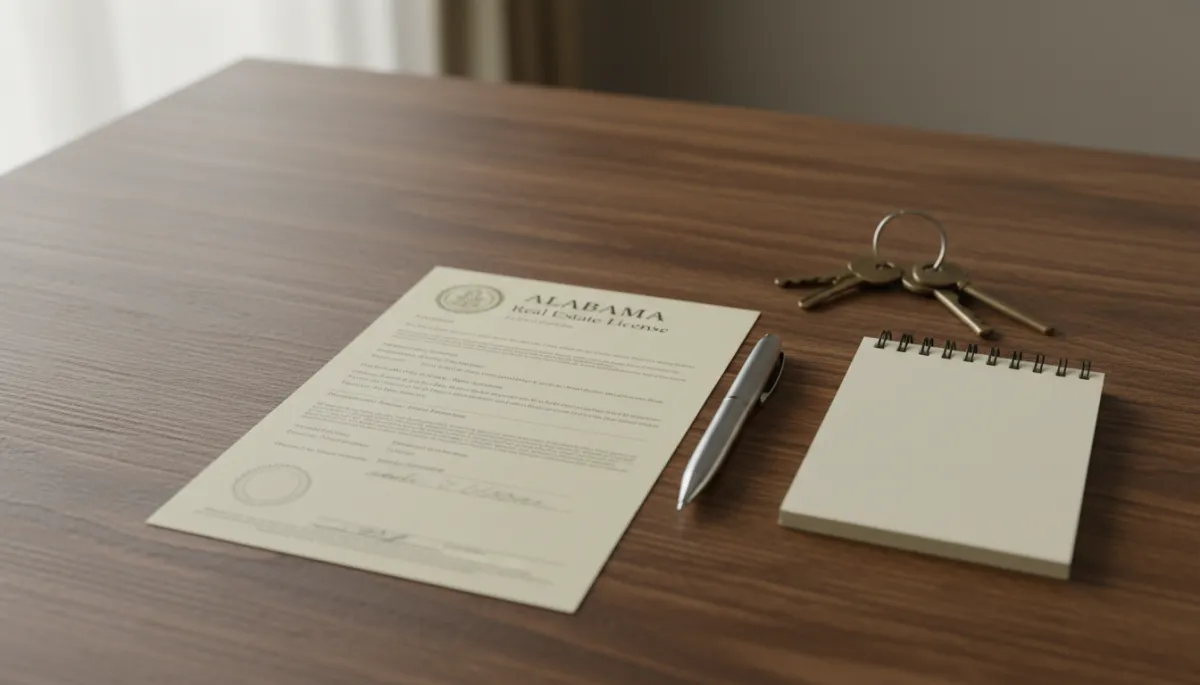
Licensure opens the door to earning commissions and building a long‑term Alabama real estate career.
Weighing the Benefits of Getting Licensed in Alabama
Deciding whether to pursue a real estate license Alabama recognizes is ultimately a business decision. A license requires an upfront investment of time, tuition, and exam preparation, but it also unlocks the ability to earn commissions, build a personal brand, and represent buyers and sellers directly. Licensed professionals typically enjoy more control over their schedules, higher income potential, and the opportunity to grow into roles such as team leader, broker, or real estate investor with a strong understanding of the market.
If you are serious about a long‑term future in property sales, leasing, or investment in Alabama, meeting the formal Alabama real estate career requirements and obtaining your license is usually the most strategic path. Starting in an unlicensed support position can provide valuable exposure, but it should be viewed as a stepping‑stone rather than a substitute for licensure if you intend to advise clients and participate fully in transactions.
Final Thoughts: Is a Real Estate License Right for You?
You do not need a license to work near real estate, but you do need one to work in real estate in any meaningful, income‑producing capacity in Alabama. If your goals include representing clients, negotiating deals, and building a name for yourself in the Alabama property market, pursuing your license is not optional—it is foundational. By understanding exactly how to get licensed as a realtor, along with the underlying Alabama real estate career requirements, you can move forward with a clear plan and realistic expectations.
Take time to research approved schools, speak with local brokers, and map out a timeline for your education, exam, and application. With a disciplined approach, many aspiring professionals complete their pre‑license course, pass the exam, and join a brokerage within a matter of months. From there, your commitment to ongoing learning, ethical practice, and client service will determine how far your Alabama real estate career can go.

PROCESS

BUYER'S PROCESS
Finding and making an offer on the right house can be complicated….and it just gets more involved as you move through the inspection, appraisal, and financing phases of the purchase. I specialize in streamlining these processes to make your experience as smooth as possible.
BUYER’S FAQs
What do I need to do before I start looking for a home?
You will first need to contact a lender and obtain a financing pre-approval letter. This will help you know how much you can afford and will help us tailor our search in finding your next home! Additionally, many sellers require that a preapproval letter accompany the offer or be submitted quickly after the offer is accepted, so it makes sense to already have one ready!
What happens after my offer is accepted?
Acceptance of the offer is only the beginning! Once your offer is accepted by the seller, the home inspection, septic (if necessary) inspection, and appraisal will all take place. I will help you understand and negotiate through each step as you get closer to closing day.
What is Earnest Money?
Earnest money is a “good faith deposit” that you put down once your offer is accepted. This money is usually held by the Seller’s broker in a non-interest bearing escrow account. If you decide not to move forward with the purchase due to contingencies outlined in the contract, the seller will release the earnest money back to you. Both parties must agree to release the earnest money.
What are closing costs and who pays for them?
Closing costs are the fees and costs that are associated with finalizing or “closing” the sale of your property. Closing costs include (but are not limited to) the appraisal fee, lender fees (such as credit report fee, loan origination fee, flood certification fees, and underwriting fees), taxes, title fees, and insurance. This is another reason to talk to a lender prior to looking for a home. Your lender will be able to take all of these extra items into account when you are deciding how much you can spend. Some closing costs are paid by the seller and some are paid by the buyer. The contract will determine who pays for what costs. It is not uncommon for buyers to ask sellers to pay for a portion of the closing costs.
SELLER'S PROCESS
Selling your home can be a daunting task. Valuing your home, getting it ready to show, managing the showing process, and negotiating offers is time consuming and can be complicated. I take care of all aspects of helping you navigate the process successfully.
Listing & Marketing
As I’m pricing and staging your home, I also develop a strategic marketing plan to target the right prospective buyers. Your home will have immediate interest and activity via inclusion in the multiple listing service (MLS) and on websites such as Zillow, Trulia, and Realtor.com. However, I take additional measures to make sure your listing gets highlighted to Realtors who have active buyers in your area. I have a very broad network and I send out targeted texts, emails, and/or phone calls in order to contact the right people with the right information. I work to create urgency and competition amongst qualified prospects so you can have the best chances at getting offers from qualified and competitive buyers.
Analyzing & Negotiating
Once you have started fielding offers, I diligently review them and help you analyze and understand the key terms. I carefully work with you to formulate a well-supported counter offer so that your price and terms are the very best possible.
Closing
I understand the stress and logistics of selling your home. My goal is to help you coordinate all the pieces of the closing and follow through on them so your process can be as stress free as possible. I work diligently with lenders and other vendors to help you close seamlessly and on time.
SELLER'S FAQs
What is the most important factor in selling?
Optimized pricing – Even in a seller’s market, if your home isn’t priced correctly, it will likely sit on the market. Homes that sit on the market for an extended time tend to lose momentum. I will provide you the tools and advice to prevent this from happening.
How do I value my home?
Recent comparable transactions is the primary item. I will gather and analyze the data to help you optimize the list price of your home. Two of the most important factors in selling your home are price and condition. I understand how to properly value your home and can price your home based on the market, your needs, and timeline. I will also advise you on how to stage your home to maximize appeal.
What do I need to do before I put my house on the market?
The first step that everyone needs to do is to declutter. Even the neatest of homes has the occasional closet or corner that could use a little organization. Buyers will be looking at every corner of your home, so make sure it’s ready to show!
Secondly, you will need to make sure your home is very clean. If a home isn’t well kept, buyers can focus on the dirt and won’t see the other features.
Finally, stage your home to sell. I am experts at this and would love to help you! Sometimes furniture rearrangements and accessorizing with item such as good lighting can do wonders to homes attractiveness. Remove excess personal photos and personal items, streamline countertops, and remove items that you don’t use every day. Open and clean space help home’s appeal to buyers.
Past Clients


Raving Fans
Bottom Line:
We are going to get the job done properly for you and not let you down. Period.
There is no risk and no obligations, just expert and friendly advice!