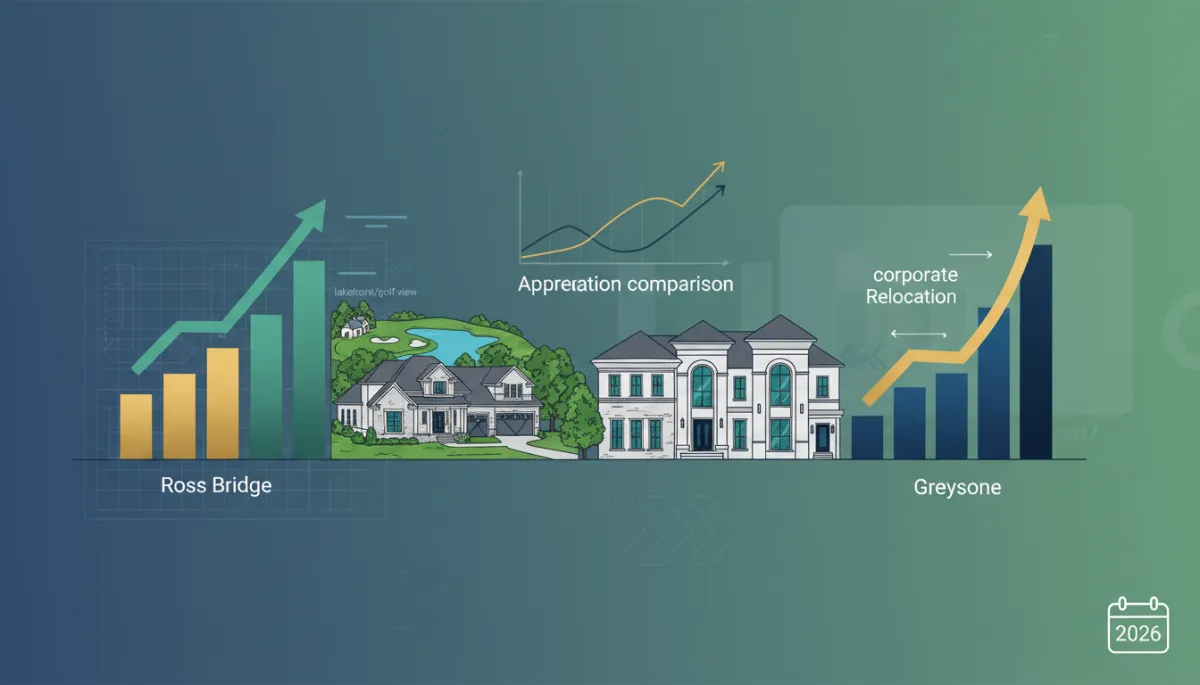
Ross Bridge vs Greystone: 2026 Investment Insights
Real Estate Investing, Hoover AL Luxury Neighborhoods
Ross Bridge vs Greystone Hoover AL — An Investor and Resale Perspective for 2026
For buyers treating a Hoover, Alabama luxury home as both lifestyle and asset, the key question in 2026 is clear: in the Ross Bridge vs Greystone investment resale Hoover AL debate, which neighborhood is more likely to protect (and grow) your capital over the next 5–10 years?
Hoover 2026: The Market Backdrop Investors Need to Know
Any comparison of luxury home investment Ross Bridge Greystone has to start with the citywide context. Across Hoover, average home values hover around $445,000 and are up roughly 2.9% year-over-year, according to Zillow, with some sources showing double‑digit gains in specific segments. Days on market generally fall in the 47–55 day range, signaling a market that has cooled from the frenzy of 2021–2022 but still shows healthy, steady demand.
Against this backdrop, Ross Bridge and Greystone sit in the higher‑price, slower‑turnover tier. These communities behave differently from Hoover’s median, especially when you zoom in on appreciation cycles, resale velocity, and rental demand — all critical for investors asking which neighborhood appreciates more Hoover Alabama 2026.
Ross Bridge Resale Performance: 5‑ and 10‑Year Perspective
Over the last decade, Ross Bridge has moved from emerging master‑planned community to mature resort neighborhood. Median sale prices around $497,000 (per Homes.com) put it above Hoover’s overall median, and earlier in the cycle Ross Bridge experienced strong appreciation as new phases opened and amenities expanded. Over a 10‑year window, many early buyers have seen meaningful equity gains, especially in larger homes and premium‑view lots.
The last 5 years, however, tell a more nuanced story. After outsized gains, 2025–mid‑2026 brought a modest pullback: a 3–4% year‑over‑year decline in median sale price, even while Hoover overall continued to edge upward. This suggests Ross Bridge may have gotten slightly ahead of itself in pricing, particularly in some higher‑end sections, leading to a short‑term re‑pricing rather than a structural demand problem.
Which Ross Bridge Sections Hold Value Best?
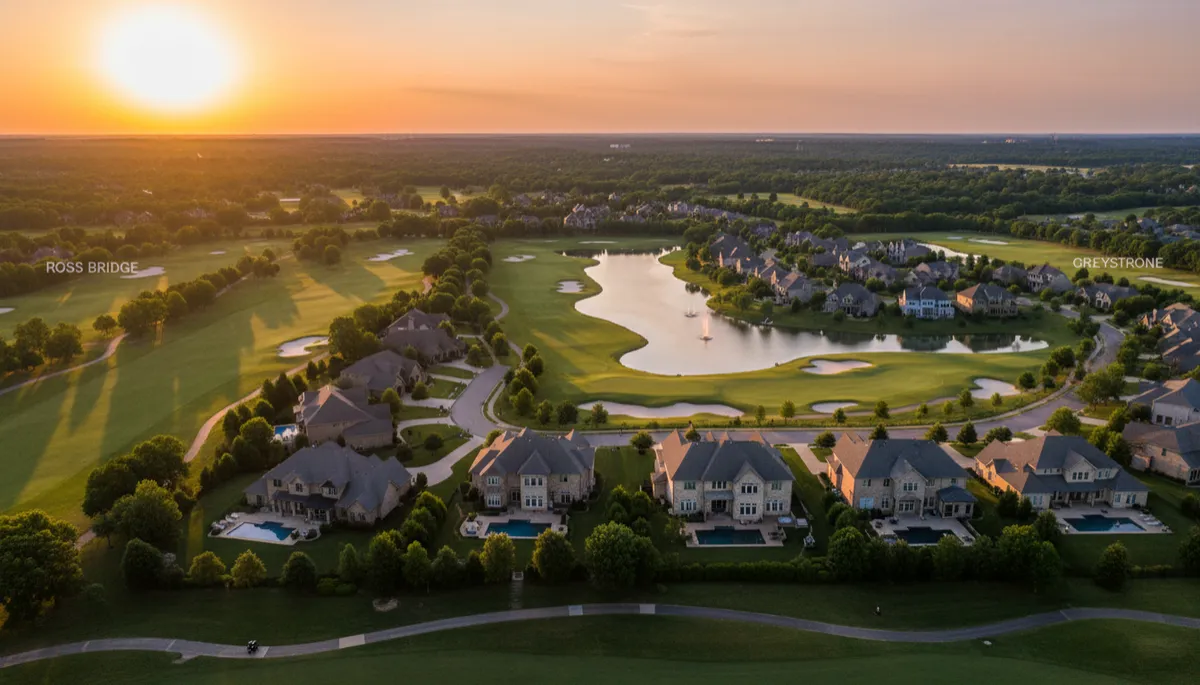
Within Ross Bridge, value is not uniform. Historically, lakefront and golf‑view lots have commanded a clear premium and shown stronger price resilience. Buyers consistently pay more for direct course frontage, unobstructed water views, and walkable access to club amenities. Even in 2025–2026, when some high‑end resales traded below prior peaks, these trophy locations have tended to see smaller percentage declines and faster contract times than interior lots on busier streets or near construction.
Days on Market and Buyer Profile in Ross Bridge
Despite the recent price softening, Ross Bridge homes still move relatively quickly. Median days on market sit around 44 days, slightly better than Hoover overall. That speed matters for investors: it reduces carrying costs and downside risk if you need to exit in a slower macro environment.
The buyer profile skews toward move‑up families, medical professionals, and lifestyle‑driven buyers attracted to the resort feel, pools, trails, and events. There is also a meaningful share of out‑of‑area buyers relocating within Alabama or from neighboring states who want a vacation‑style setting without leaving the Birmingham metro. For long‑term investors, this diversified, lifestyle‑oriented buyer pool is a positive: it supports ongoing demand even if purely financial buyers step back.

Premium lakefront and golf‑view lots consistently command higher resale values over time.
Greystone Resale Data: Core Greystone vs Greystone Legacy
Greystone sits at a higher price tier than Ross Bridge, with median resale prices around $640,000 in the Hoover‑defined submarket and Realtor.com data showing even higher medians for the broader Greystone area. Within the gates, two segments matter most for investors: traditional Greystone and Greystone Legacy.
Core Greystone, with its original golf‑course homes and established streets, tends to offer slightly older housing stock but larger lots and mature landscaping. Greystone Legacy, by contrast, often features newer construction, updated finishes, and a more contemporary feel. Over the past decade, both sections have appreciated solidly, but Legacy has typically shown a slight edge in percentage appreciation thanks to newer product and strong appeal to buyers who want “turn‑key” luxury with minimal renovation risk.
Even with a modest 3.8% year‑over‑year decline in median resale prices through mid‑2026, Greystone’s longer‑term trajectory remains positive. The recent dip looks more like a cyclical adjustment after rapid gains than a reversal of the underlying value story.
How Greystone Performs in Down vs Strong Markets
Historically, Greystone behaves like a classic blue‑chip asset: it may not spike as dramatically in hot markets as emerging neighborhoods, but it tends to hold value better in down cycles. In softer conditions, days on market lengthen (currently around the mid‑50s), but sale‑to‑list ratios remain relatively tight and high‑quality homes still trade close to asking price. In strong markets, appreciation is steady rather than speculative, supported by limited supply, brand recognition, and the prestige of the golf and country club environment.
The Corporate Relocation Premium in Greystone
One of Greystone’s most important investment drivers is the corporate relocation premium. For many incoming executives and upper‑management hires in the Birmingham–Hoover area, Greystone is the default first choice: gated, prestigious, close to major employment centers, and well known among HR and relocation firms. That means a consistent stream of buyers with strong income, relocation packages, and tight move‑in timelines.
This relo demand provides a floor under prices. Even when interest rates rise or local sentiment cools, companies still move people, and those buyers disproportionately target Greystone and Greystone Legacy. For investors, that translates into more predictable exit options and a higher likelihood of securing a qualified buyer quickly, especially for well‑maintained properties in prime positions along the course or on quiet cul‑de‑sacs.
Investment Comparison: 5‑Year Hold, 10‑Year Hold, and Rental Potential
Putting the data side by side, how does Ross Bridge vs Greystone investment resale Hoover AL stack up for different strategies?
- 5‑Year Hold: Over a shorter window, Greystone’s corporate relocation pipeline and history of value retention in softer markets give it a slight edge. Even if appreciation is modest, the probability of a stable resale outcome is high, especially in Greystone Legacy and well‑located core Greystone homes.
- 10‑Year Hold: Over a decade, both neighborhoods look compelling, but Greystone again leans slightly stronger on appreciation potential. Its brand, limited land availability, and entrenched status as a top‑tier address in the metro support compounded gains, particularly for properties with golf or lake views and updated interiors.
- Rental Income: Here, Ross Bridge often wins. The resort feel, pools, events, and family‑friendly amenities create strong demand for long‑term executive rentals and mid‑term leases (e.g., traveling medical professionals). Rents relative to purchase price can be attractive, and occupancy tends to be robust, especially for well‑furnished homes near amenities. Greystone absolutely supports luxury rentals as well, but HOA rules, higher purchase prices, and a stronger “owner‑occupied” culture can compress yield compared with Ross Bridge.
Final Verdict: Which Neighborhood Appreciates More in Hoover Alabama 2026?
Weighing the data and demand drivers, the 2026 answer is nuanced: Greystone shows slightly stronger appreciation potential over both 5‑ and 10‑year horizons, thanks to its corporate relocation premium, established luxury brand, and resilience in down markets. For investors whose top priority is long‑term equity growth and a predictable resale exit, Greystone — particularly Greystone Legacy and prime golf‑course locations — edges out Ross Bridge.
At the same time, Ross Bridge offers stronger rental demand and potentially better income yield relative to entry price, especially in sections with lakefront or golf‑view lots and walkable access to amenities. For buyers seeking a blend of personal enjoyment and steady rental income, Ross Bridge can be the more flexible, cash‑flow‑friendly choice — even if its appreciation curve is slightly bumpier in the near term.
If you are evaluating a specific property in either neighborhood, the next step is a granular, address‑level analysis: section, lot position, view, condition, and rental rules all materially impact returns. To get a tailored investment and resale strategy for your situation, schedule a consult at bennyroberts.net/book-buyer and stress‑test your options before you write an offer.